DeepSeek Harness Plugins · Memory
Plugins that extend DeepSeek Harness (DSH) with vision, workflows, memory, web tools and more.
Memory plugins persist notes across Harness sessions: decisions, glossary, files that matter. They help on a codebase you return to for weeks. They hurt when they replay a stale decision as if it were still policy, or when they store a token the agent pasted into a note.
Read where the store lives. A file inside the repository will be committed if you are not careful, and teammates will inherit it. A file outside the repository will be missing on the next machine, which feels like the agent "forgot" again. Pick one and say so in the note you think you are saving.
One memory plugin is enough. A second one writes a second biography. The agent will quote the wrong one with the same tone. If you only forgot a single decision, write it in a project file the agent already reads before you install persistence you must curate. The plugin category guide recommends that delay.
Do not use memory as a place for secrets. A prompt that says "remember my keys" is asking for a leak with a search box. Keep secrets in the agent's secret store.
Test the plugin by saving one boring sentence and restarting the session. If the sentence does not come back, the plugin is not installed, no matter what the UI claimed. If a different sentence comes back, you are reading someone else's store or a default demo memory. Clear it before you trust the tool with a real decision.
Once a month, delete one stale sentence on purpose and confirm the agent stops repeating it. If it still repeats the sentence, you have a second store. Find it before you trust the plugin with a new decision. A memory you cannot edit is a rumor with a plugin icon. Find the second store before you add a new decision to the first.

Memory layer for coding agents that indexes local session history and auto-recalls relevant context before edits, commands, and failures, with no manual search needed.

Traceable, searchable cross-session memory for AI agents that turns conversation knowledge into a typed knowledge graph and recalls relevant subgraphs instead of replaying full history, natively integrated with DeepSeek Harness.
Gives DSH AI cross-session long-term memory, to-do and skill management, plus multi-session orchestration, external AI delegation, and an infinite canvas that grows with you.
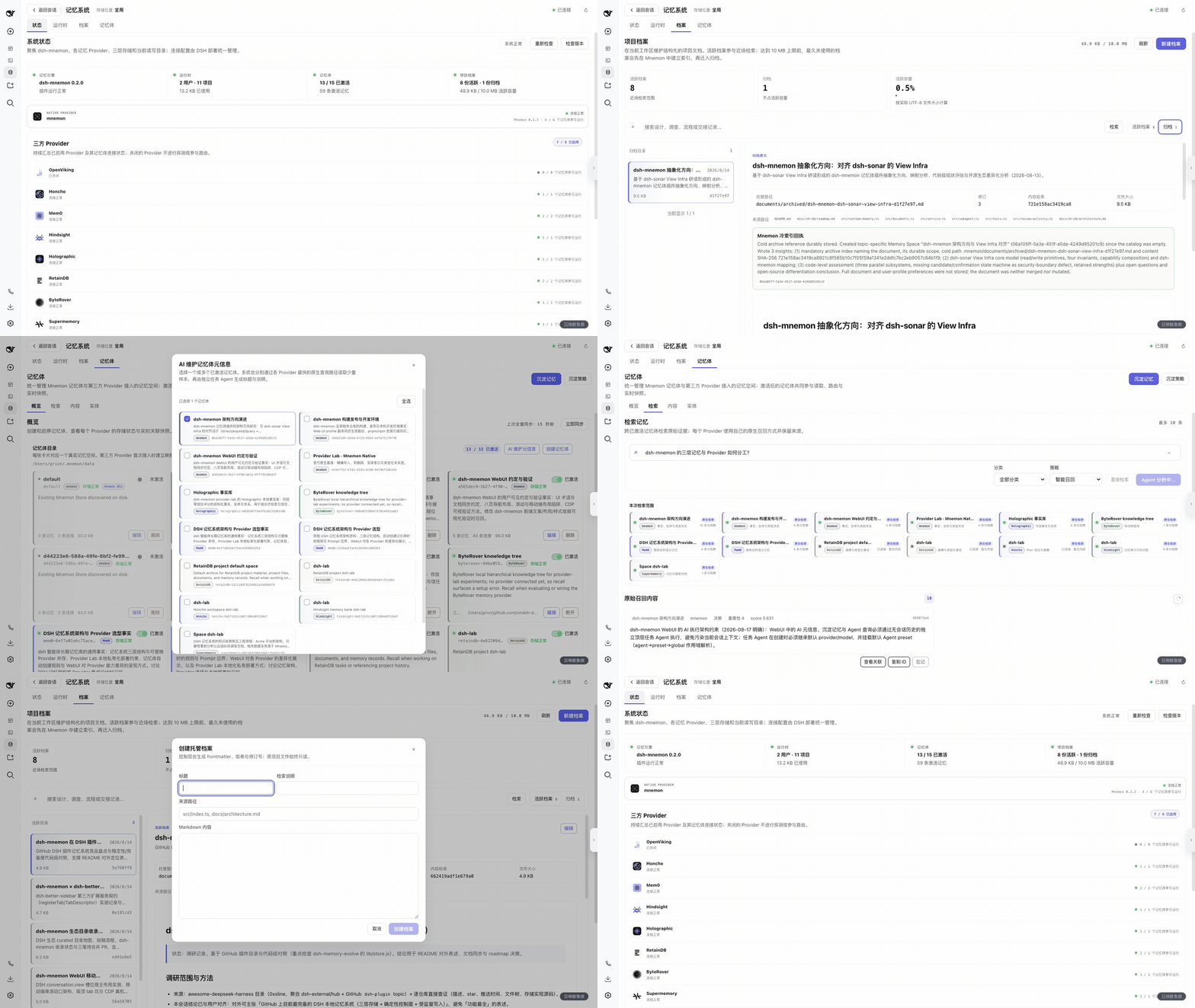
dsh-mnemon is a three-tier, pluggable, Agent-driven memory system for DeepSeek Harness, combining Runtime memory, Project Documents, and replaceable Memory Spaces with nine long-term providers.
An opinionated, zero-infrastructure file-based memory protocol: human-readable markdown files plus a bounded always-loaded index, curation discipline, and no database or embeddings.

DSH Noema adds durable Noema-backed long-term memory to DeepSeek Harness, with Markdown persistence, imports from other AI coding tools, settings-page management, keep-alive, and hot reload.
Import conversation history from 18 AI coding tools into DeepSeek Harness with full context (tool calls, reasoning, titles, models, timestamps) for seamless resumption, plus export back to Claude Code, Codex, and Kimi Code.
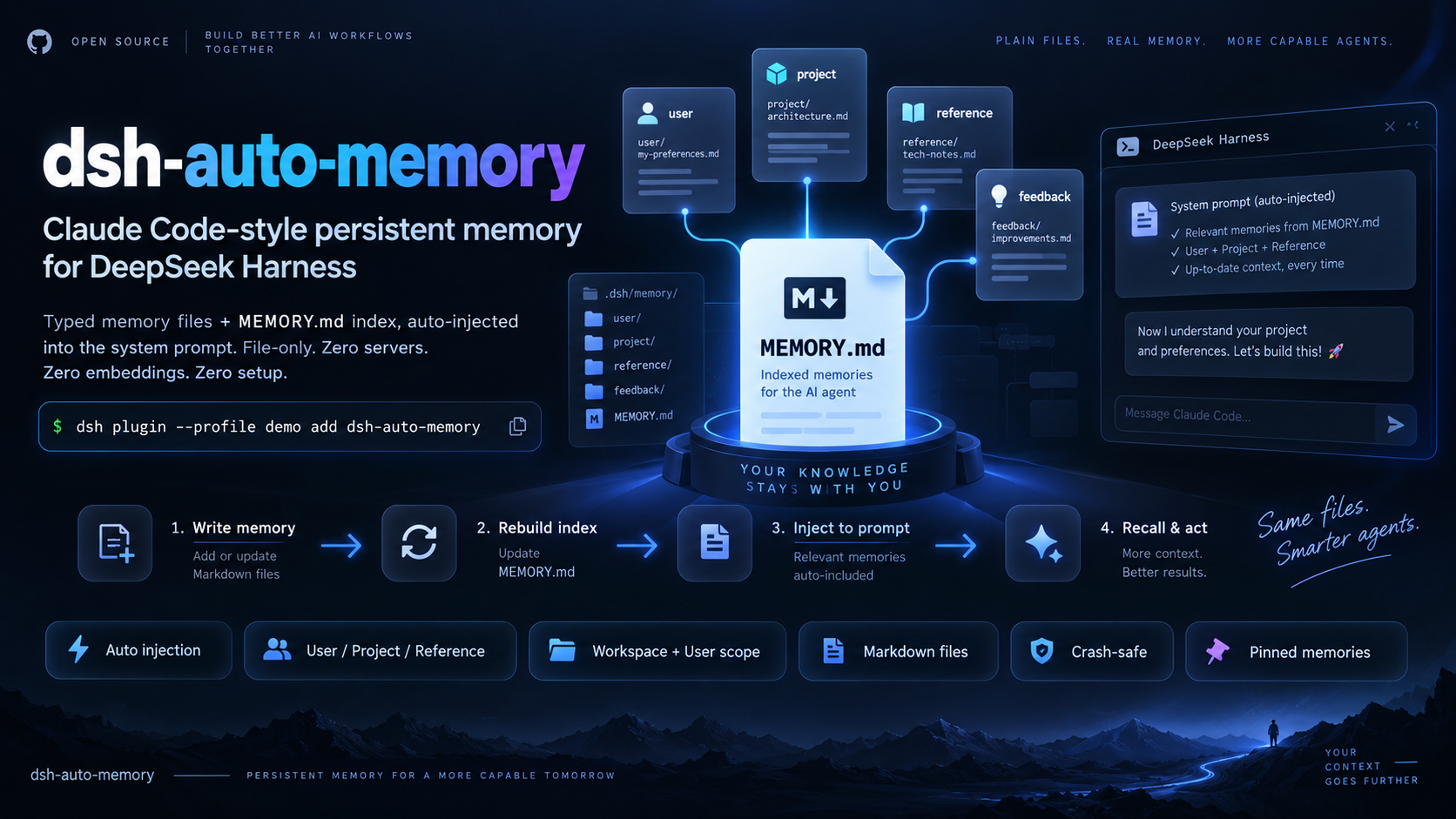
Native Claude Code-style persistent memory for DeepSeek Harness—plain Markdown files, no servers or embeddings, auto-injected into system prompts.
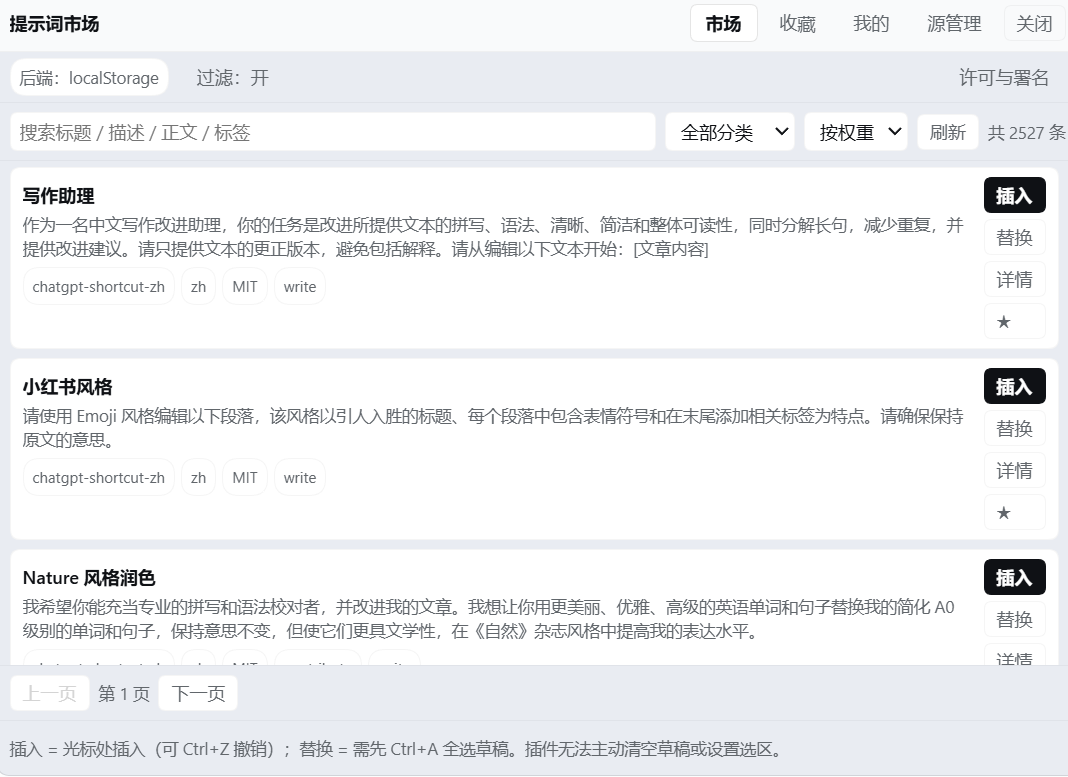
Browse, search, and favorite prompts in-panel and insert them into the chat input; built-in sources, favorites, local prompts, filtering, and import/export.
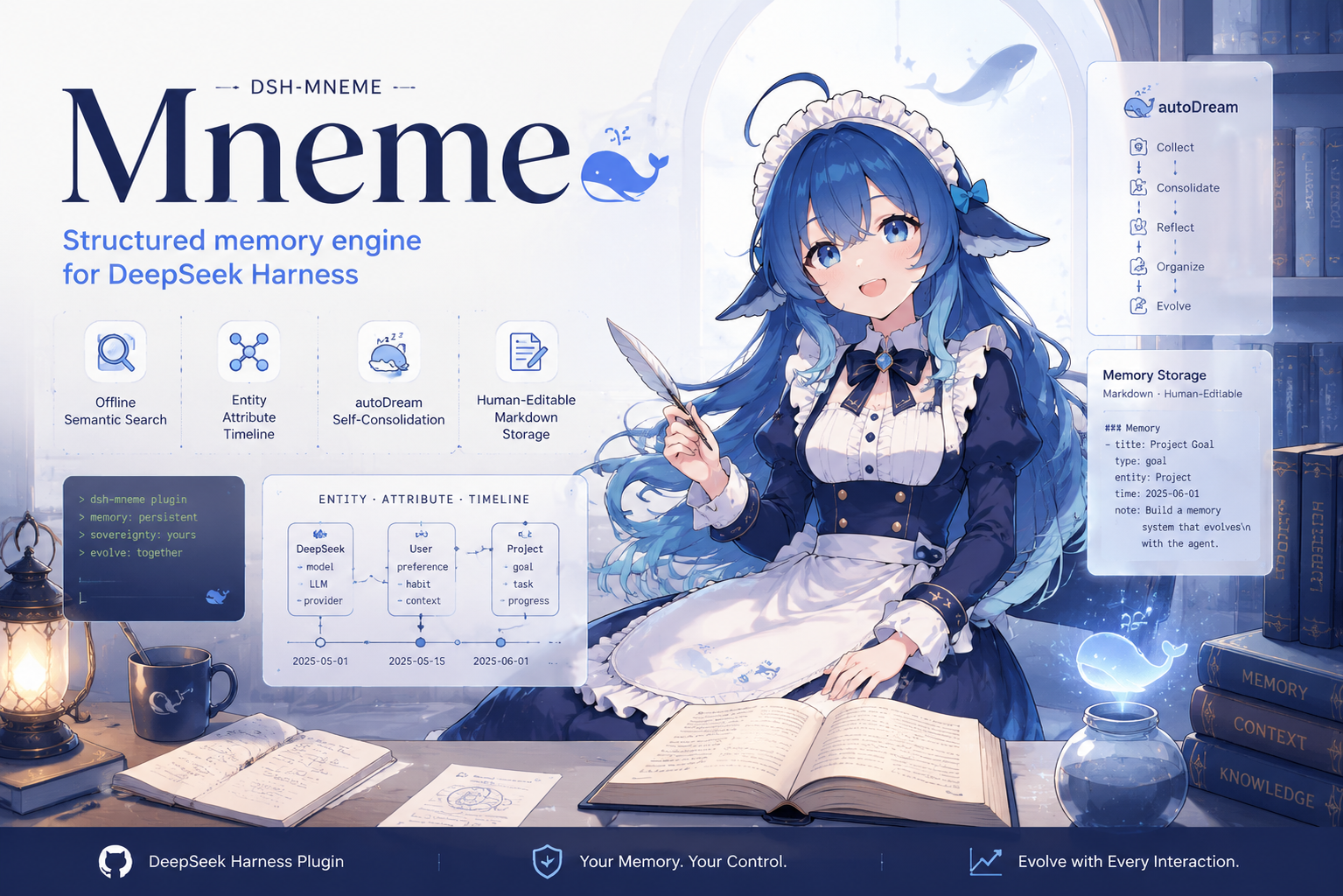
Provides persistent cross-session memory for DeepSeek Harness, automatically recording, consolidating, and injecting relevant memories in new sessions, with local Markdown storage and fully offline by default.
Provides cross-session memory for DeepSeek Harness with seven-layer memory, keyword-based recall, project anchoring, and idle "dream" consolidation, cache-friendly with zero runtime dependencies.
Shared Obsidian Markdown vault memory for Claude Code, Codex, Cursor, and DeepSeek Harness—answers cite source pages, corrections supersede old notes, and agents refuse when nothing matches.